 ORMA
 ← Back to Safety Library
In 20 seconds
- Walk on cleared winter paths. Keep off ski runs, sled runs and cross-country tracks.
- Be off the trail by about 4 pm in December and January.
- After salted streets, rinse and dry your dog’s paws. Clear snow from between the toes.
Winter walks are shorter and slower. Paths are packed snow or ice, the sun goes early, and your dog gets cold faster when you stop.
Where to walk
Cleared winter paths. Tourist boards clear or roll some paths every winter. These are the walks to choose. Our Winter walks with your dog collection lists ones we have checked.
Not on ski runs. Italian law does not allow walking on ski runs except in an emergency. Cross only at marked points, quickly, with your dog on a short lead.
Not on cross-country tracks. Many winter paths run right next to them. The Seiser Alm board, for one, asks walkers and dogs to keep off. Paw prints ruin the tracks.
Sled runs. Avoid them. If a path is shared with sledges, walk at the edge in single file with your dog on a short lead.
Cold
Who feels it first: small dogs, short or thin coats, puppies, older dogs and dogs with joint pain or illness. A dog coat helps, above all when you stop for a break.
Signs, and what to doFrom shivering to hypothermia
| Stage | What you see |
|---|---|
| Cold | Shivering, lifting paws, slowing down, whining, wanting to turn back. |
| Too cold | Drowsy or confused, clumsy, pale gums. Shivering can stop when a dog is very cold. |
Get your dog dry and out of the wind, wrap them in a coat or blanket and warm them slowly. Call a vet. Don’t wait and see.
Salt, ice and snowballs
Salt on village streets and car parks dries and cracks pads. Rinse and dry paws, legs and belly after the walk, and don’t let your dog eat salty snow.
Snowballs build up in the fur between the toes and hurt. Trim that fur short, and clear the snow gently as you go. Boots or paw balm help on salt and crusted ice.
Antifreeze in car parks tastes sweet and is very poisonous. If your dog licks some, go to a vet straight away. More on paws in Paw protection.
Short days, ice and lifts
Daylight is short. In mid-December the sun sets around 4:30 pm in Bolzano and Cortina, and earlier in deep valleys. Start by late morning and be back by about 4 pm. A light on the collar helps on the way to the car.
Frozen lakes and streams. Keep your dog off the ice and on a lead near the shore. If your dog goes through the ice, don’t go after them: call 112.
Water. Streams and fountains freeze, and snow is not a drink. Carry water in an insulated bottle.
Rules still apply. In Italy dogs are on a lead of up to 1.5 m in public places, with a muzzle to hand. Local dog rules apply in winter too. In South Tyrol the hunting season runs to mid-December, and dogs must never roam free outside villages.
Lifts. Most Dolomites lifts take dogs on a lead and in a muzzle, and some charge a small fee. Ask at the lift. See Cable cars with your dog.
Sources and medical referencesLast reviewed November 2026
Veterinary material consulted: PDSA winter advice and hypothermia signs, AVMA cold weather safety, and Blue Cross advice on dogs in winter. Rules: Italian winter sports law D.Lgs. 40/2021 (art. 24 on walking on ski runs, art. 26 on avalanche equipment), Ministry of Health dog ordinance of 6 August 2013 as extended, South Tyrol hunting law L.P. 14/1987 (art. 4 seasons, art. 35 dogs), and the Seiser Alm board’s dog page. Avalanche bulletins: Euregio (avalanche.report) and ARPAV Veneto. If your dog shows signs of cold or injury, seek veterinary care.
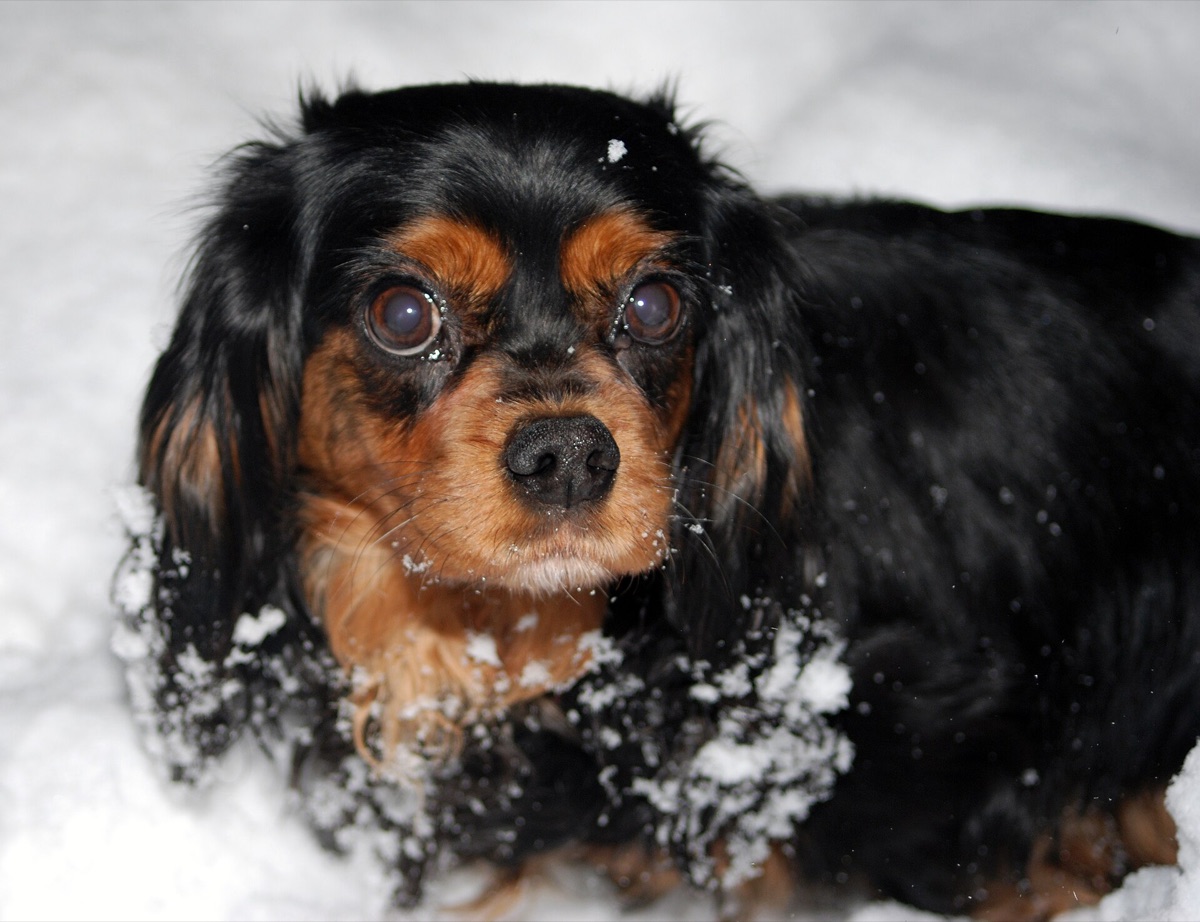
Photo: Holly in the snow, allen watkin, CC BY-SA 2.0, cropped (Wikimedia Commons).
This is general information, not a diagnosis or a substitute for veterinary care.