 Airway & cooling
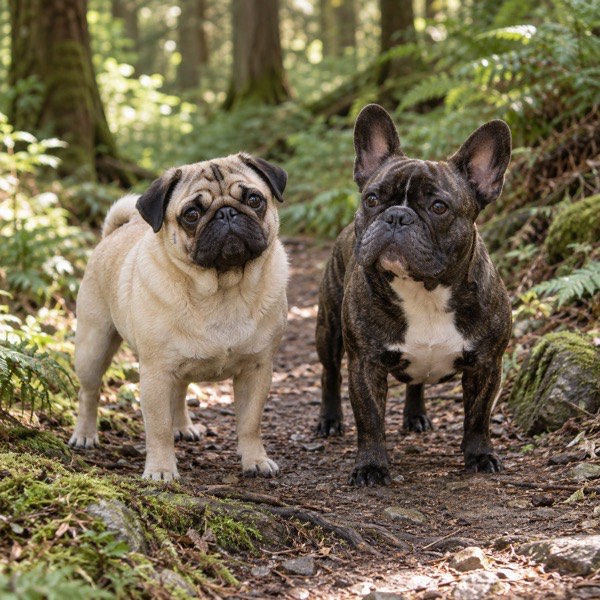
Flat or short nose
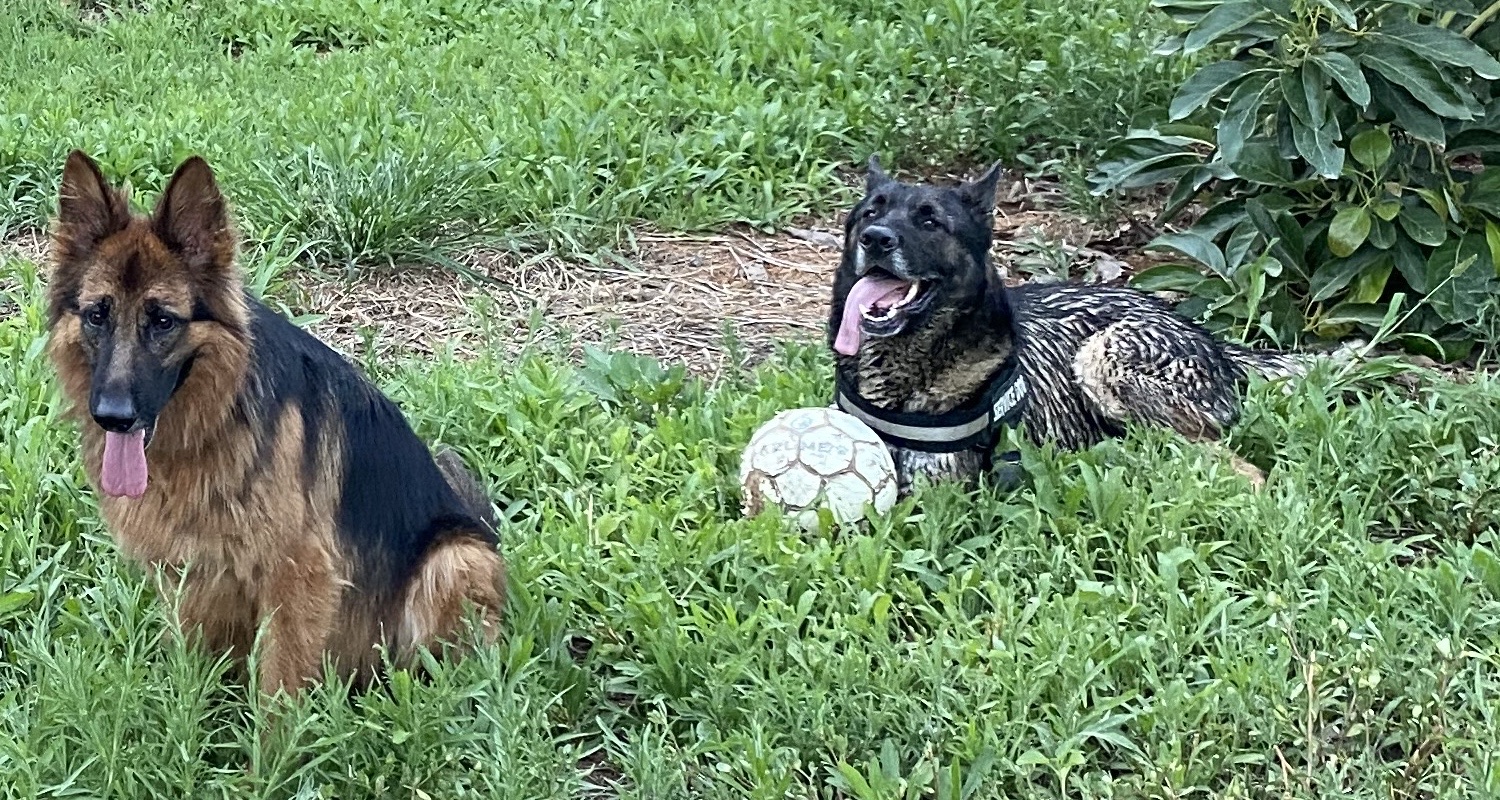
Pug, French or English Bulldog, Boston Terrier, Boxer, Shih Tzu, Pekingese, Japanese Chin, Brussels Griffon, Dogue de Bordeaux
Choose: short, shaded, cool routes with water and an immediate exit.
- Warmth, humidity, excitement and climbing all increase airway and heat load.
- Noisy or laboured breathing at rest or light effort is not normal.
Edge cases
Cavaliers and some crosses can have a shortened muzzle without looking extremely flat. Body condition and any diagnosed airway disease can add risk.
 Coat & heat
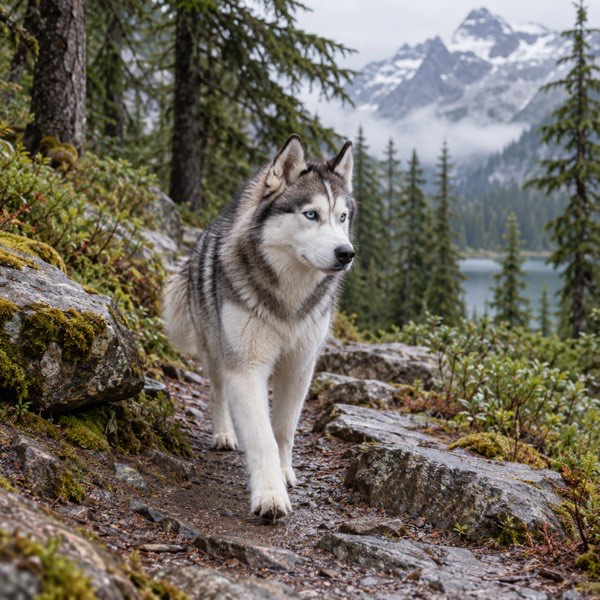
Dense or double coat
Chow Chow, Husky, Malamute, Akita, Samoyed, Keeshond, Newfoundland, Bernese Mountain Dog, German Spitz
Choose: the coolest part of the day, reliable shade and low-exertion escape options.
- Do not use cold-weather ability as evidence of heat tolerance.
- Stop at the first change in pace, breathing, coordination or responsiveness.
Edge cases
Dark coats, overweight dogs and dogs not acclimatised to heat may need an even smaller margin. Ask a vet or qualified groomer before making major coat changes.
 Joint load & rescue
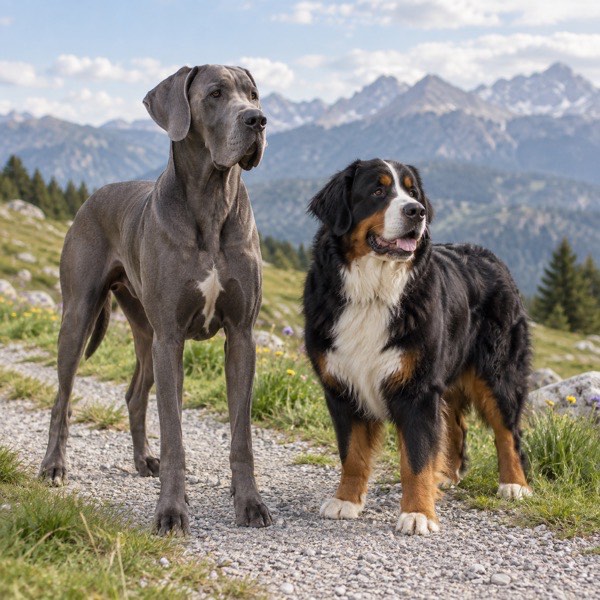
Large, giant or heavy
Great Dane, Saint Bernard, Newfoundland, Bernese, Leonberger, Mastiff, Rottweiler, large livestock guardians
Choose: gradual descents, stable footing and a route from which you could evacuate a dog you cannot carry.
- Downhill braking and repeated rock steps can reveal discomfort before flat walking does.
- Turn back for a new short stride, stiffness, reluctance or altered gait.
Edge cases
Growing large-breed dogs, dogs with arthritis or previous orthopaedic surgery need an individual exercise plan from their vet.
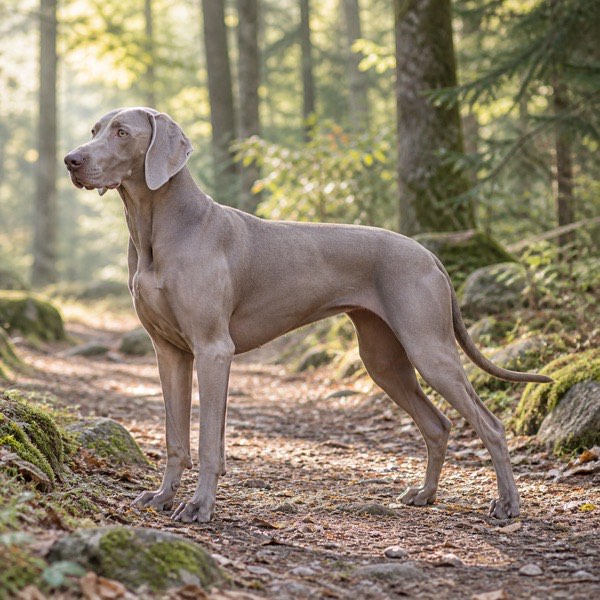 Bloat / GDV awareness
Deep chest
Great Dane, Weimaraner, Irish or Gordon Setter, Standard Poodle, Doberman, German Shepherd, Saint Bernard
Plan: know the nearest emergency vet and follow your own vet’s feeding and prevention advice.
- Repeated retching without producing anything, drooling, distress or a swelling abdomen is an emergency.
- Discuss individual GDV risk and preventive gastropexy with your vet before remote trips.
Edge cases
Any breed can develop gastric dilatation or volvulus. Age, a close relative with GDV and large or giant size can add risk.
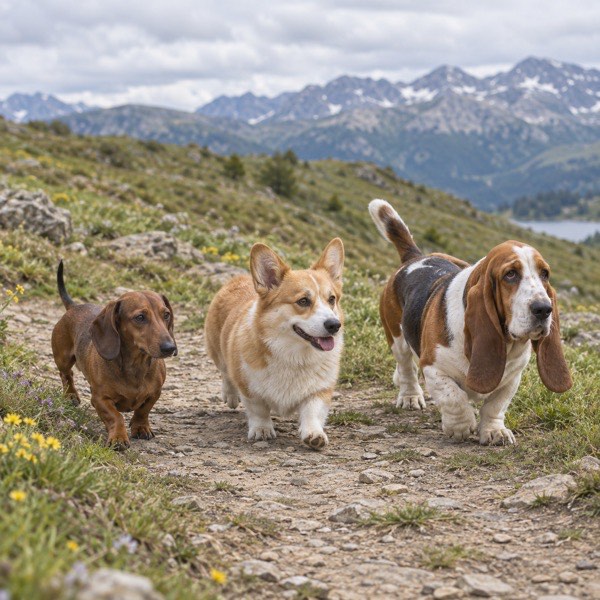 Spine & repeated drops
Long back or short legs
Dachshund, Corgi, Basset Hound, Pekingese, Beagle, Lhasa Apso, Shih Tzu and other chondrodystrophic dogs
Choose: smooth, ramp-like terrain with fewer jumps, ledges and body-height steps.
- Do not pull or encourage a reluctant dog over repeated obstacles.
- Stop for back or neck pain, trembling, weakness, crossed hind feet or a new wobbly gait.
Edge cases
French Bulldogs and some mixed breeds can also carry chondrodystrophic body traits. A previous disc episode requires a vet-led activity plan.
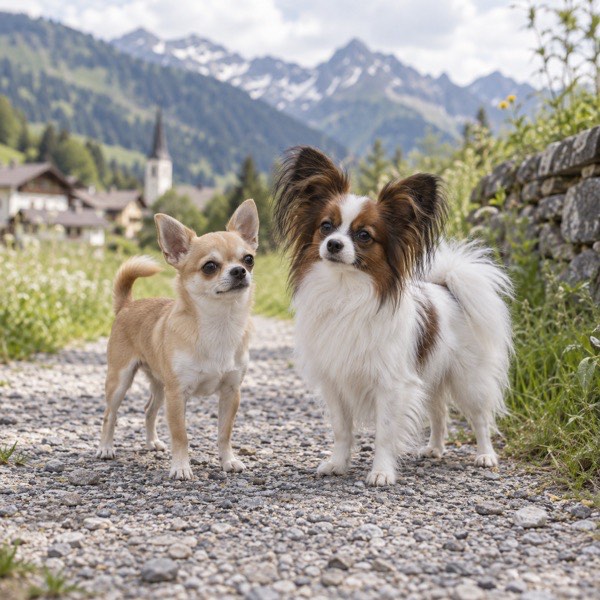 Stride, cold & exposure
Small or toy size
Chihuahua, Yorkshire Terrier, Maltese, Papillon, Toy Poodle, Pomeranian, Miniature Pinscher and small crosses
Choose: shorter distances, low steps and sheltered rest points; carry a secure emergency carrier.
- A small dog takes more steps and meets more obstacles at body height.
- Wind, rain and cold can reduce tolerance quickly, especially when the dog stops moving.
Edge cases
Being easy to carry does not make an exposed scramble suitable. Use a well-fitted harness and do not rely on carrying a dog across terrain that is unsafe for you.
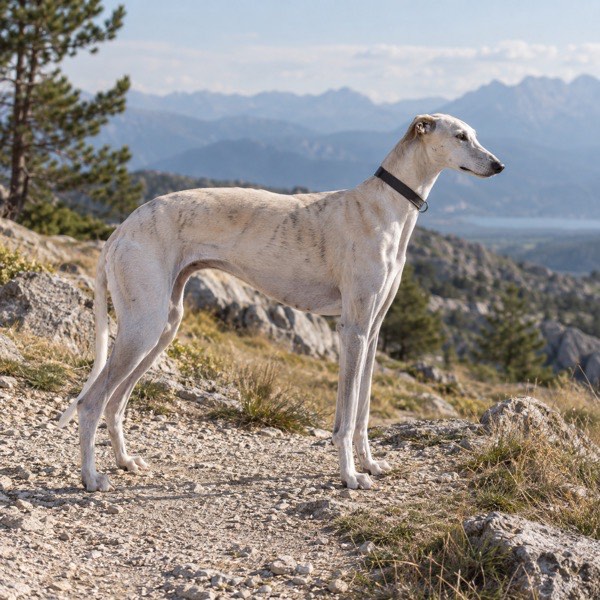 Cold, sun & skin
Thin, short, hairless or pale coat
Greyhound, Whippet, Italian Greyhound, Vizsla, Pointer, Dalmatian, Chinese Crested, Xoloitzcuintli; dogs with pink noses or pale skin
Pack: a dry insulating layer and plan shade on high-UV, exposed routes.
- Shorten cold exposure for shivering, paw lifting, a tucked posture or reluctance to walk.
- Ask your vet which dog-safe sun protection is suitable for thinly furred or pale areas.
Edge cases
Small size, old age, low body weight and illness further reduce cold tolerance. Sharp limestone and scrub can also injure thin skin.
 Drive & self-pacing
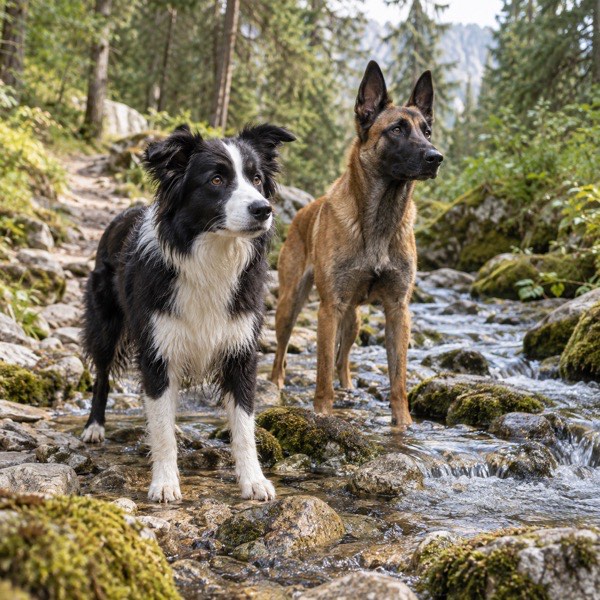
High working or sporting drive
Border Collie, Australian Shepherd, Cattle Dog, Belgian Malinois, working Spaniels, Retrievers, Pointers and Setters
Plan: scheduled shaded rests and calm walking before the dog looks tired.
- Task focus and excitement can override self-pacing.
- Leash before livestock and stop repetitive chasing, retrieving or circling in heat.
Edge cases
A dog that stays enthusiastic can still be overheating. Compare coordination, response to cues and recovery with that dog’s normal.
 Recall & wildlife
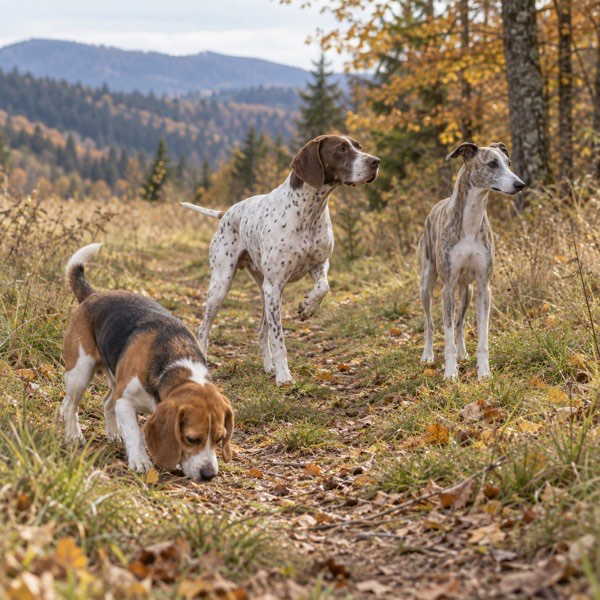
Strong scent or prey drive
Beagle, Bloodhound and scent hounds; Terriers; Pointers and Setters; Sighthounds; Nordic and primitive breeds; many crosses
Choose: a fixed leash or managed long line wherever wildlife, livestock, cliffs or roads raise the consequence of recall failure.
- Assume recall may weaken when scent or movement takes over.
- Do not test off-leash reliability for the first time in high-consequence terrain.
Edge cases
Reliable recall at home does not predict recall around marmots, deer or livestock. Local leash rules always override the plan.
 Space & guarding
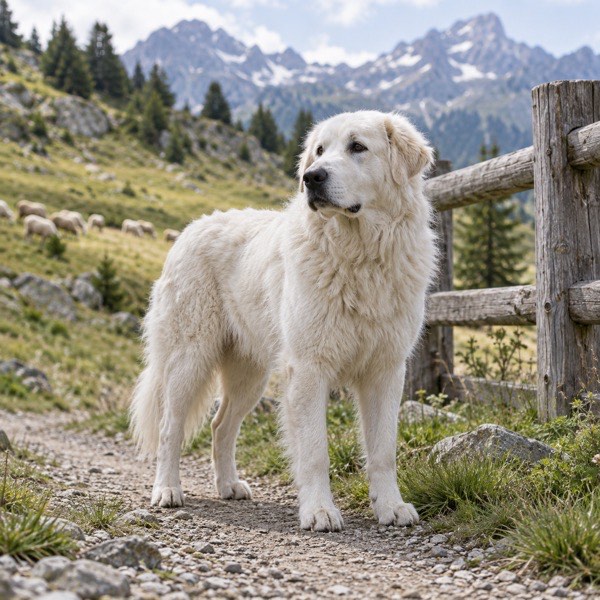
Guardian or territorial instinct
Maremma, Great Pyrenees, Kuvasz, Kangal, Anatolian Shepherd, Tibetan Mastiff, Hovawart and guardian-type crosses
Choose: visible trails with room to create distance from dogs, people and livestock.
- Avoid narrow bottlenecks if your dog becomes still, watchful, blocking or vocal around approaches.
- Never approach a working guardian dog or the animals it protects.
Edge cases
Breed does not guarantee behaviour. Use the response you actually see and turn around early when distance is disappearing.
 Known or suspected medical risk
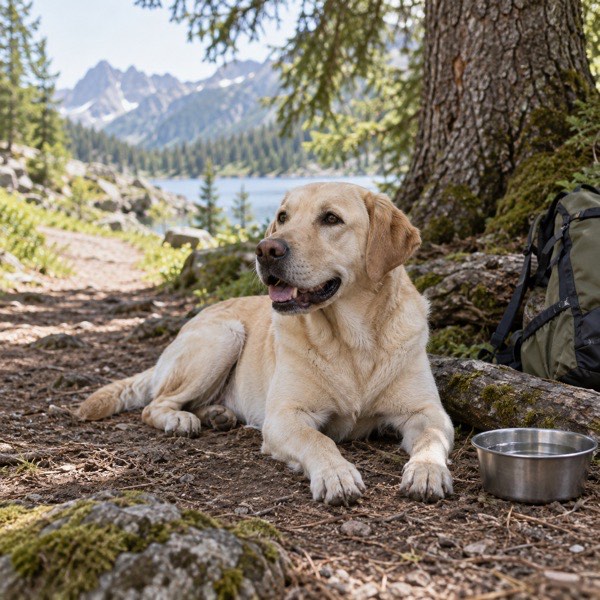
Collapse or noisy-breathing history
Exercise-induced collapse is documented in Labradors and some related breeds; exercise-triggered collapse also occurs in Border Collies and related herding breeds. Laryngeal paralysis is commonest in older large dogs, especially Labradors.
Before hiking: get a diagnosis and an individual limit from your vet; do not “test” the dog on a remote trail.
- Heat, excitement and intense exercise can worsen several collapse or airway disorders.
- Collapse, disorientation, staggering, blue gums or struggling to breathe needs urgent help.
Edge cases
A changed bark, raspy breathing, coughing, gagging or new heat intolerance in an older large dog deserves veterinary assessment before the next hike.
 Grass awns & hidden skin
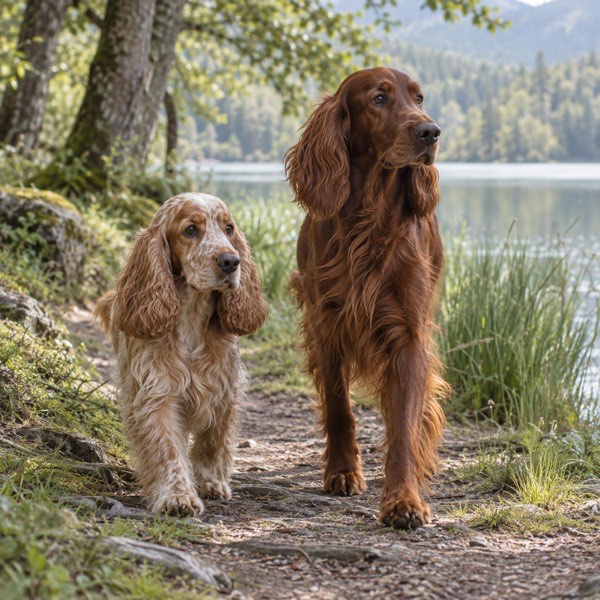
Long coat, feathering or floppy ears
Spaniels, Setters, long-coated Retrievers, Poodles and doodle-type coats, Bearded Collie, Briard, long-eared hounds
After grass or scrub: inspect ears, eyes, armpits, groin, coat and every space between the toes.
- Barbed grass awns can enter skin, ears, eyes, nose or paws and migrate into tissue.
- Persistent sneezing, head shaking, eye pain or licking one paw after exposure needs prompt veterinary attention.
Edge cases
Awn risk comes from exposure and coat/ear structure, not pedigree. Short-coated dogs can still inhale or step on them.
 Breed-independent limits
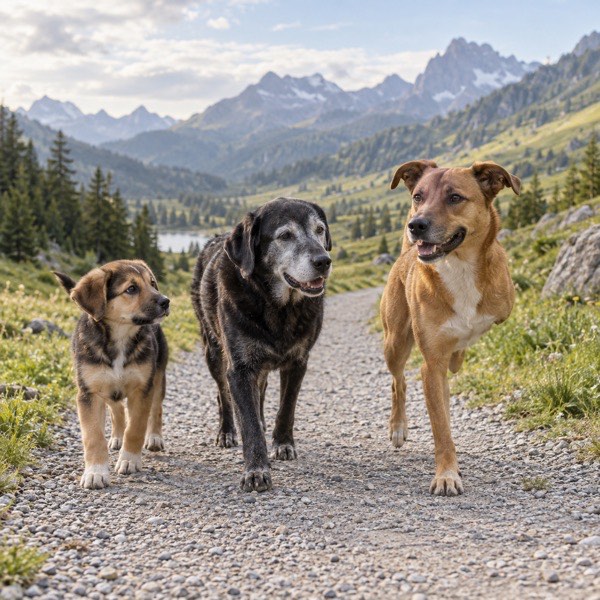
Young, older or medically limited
Puppies; seniors; overweight or under-conditioned dogs; pregnancy; recent illness or surgery; heart, lung, neurologic, joint or metabolic disease; sensory or mobility differences
Choose: a vet-approved distance with simple terrain, frequent reassessment and an evacuation plan.
- Do not use another dog of the same breed as the benchmark.
- Medication, surgery or a good day does not prove readiness for a longer route.
Edge cases
Blind, deaf and three-legged dogs can hike successfully when the route and handling match the individual. Familiar cues, secure footing and conservative exposure matter more than a generic breed rule.
 ORMA
ORMA