 ORMA
ORMAYou see the herd first
Leash and detour
Keep your dog close and go widely around the flock, never between animals. Turn back if there is no safe gap.
 ← Back to Safety Library
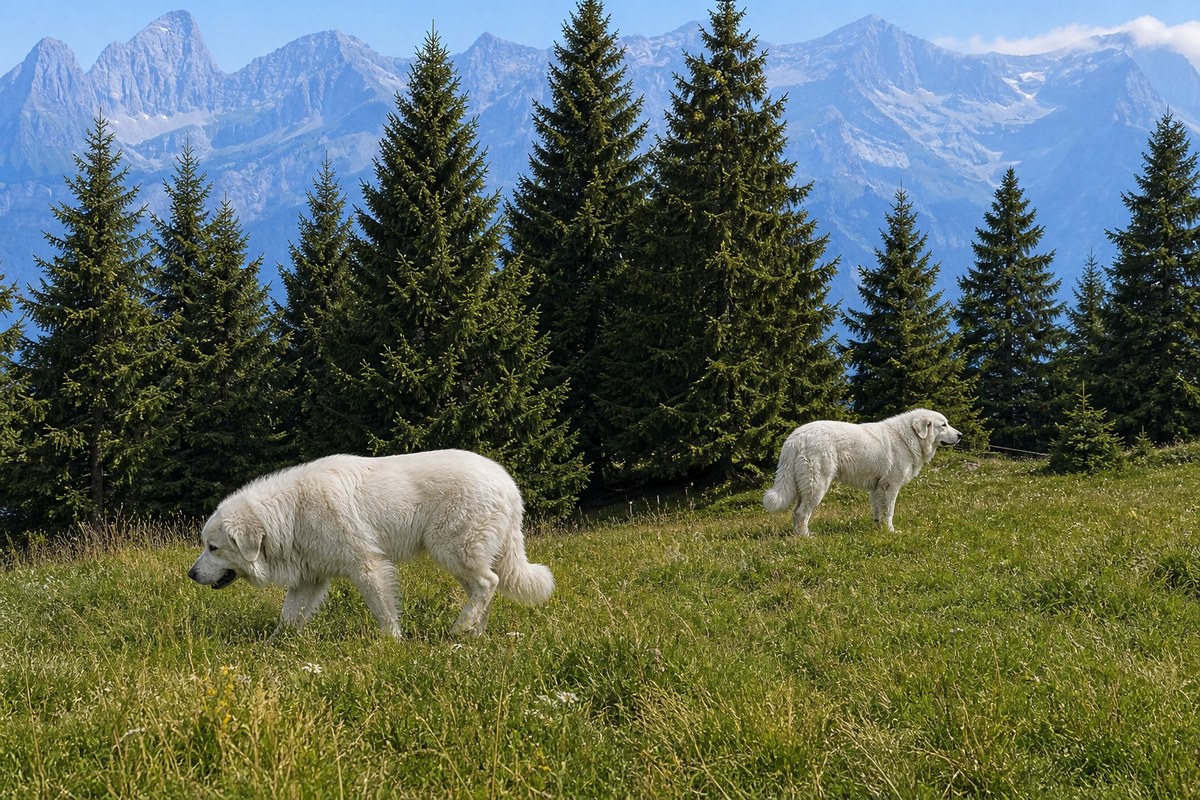
See the herd early, leash your dog, create distance and detour calmly around guarded livestock.
Barking, approaching or placing itself between you and livestock are deterrent behaviours. They are not a reason to approach, test the dog or continue through the herd.
Keep your dog close and go widely around the flock, never between animals. Turn back if there is no safe gap.
Stay calm and still, or move very slowly. Avoid staring; keep poles down and let the dog assess you from a distance.
Leash is the default while distance is still possible. If conflict actually begins, French national guidance says to release the lead. Never pick your dog up; move away calmly and turn back.
Do not approach the flock, pet or feed the guardian, throw objects or place yourself closer for a photograph.
Cattle are different: give them, especially cows with calves, a wide berth. Keep your dog leashed, but release the lead if cattle chase you so you can reach safety separately.
References checked 25 August 2026: French National Parks guardian-dog guidance and the official DREAL leaflet; Vallée d’Aulps current guidance; and UK Department for Environment, Food & Rural Affairs cattle advice. Local signs and restrictions override general guidance. Animal behaviour is never guaranteed.
This is general information, not a diagnosis or a substitute for veterinary care.